
Tikoncha is not a ban,it is smart control
Your child learns healthy technology habits, and the phone no longer controls your child


The problem is getting worse!

The data is alarming. These are not just numbers, this is children's lives.


LIVING SOMEONE ELSE'S LIFE
4.8 hours
Seventeen-year-olds spend 4.8 hours per day just on social media platforms like TikTok and Instagram.

ATTENTION FRAGMENTATION
20 min
After a single phone notification distracts a student, it takes about 20 minutes to fully regain focus on study.

ALWAYS ONLINE
46%
Almost half of teenagers (46%) admit they are online 'almost constantly'.

DEPRESSION RISK
3x higher
Teenagers who spend more than 3 hours per day on social media have a three-times higher risk of depression and anxiety.
Consequences are serious
Excessive screen time is not just wasted time. It affects children's mental and physical health.


Depression and anxiety
Excessive social media use increases feelings of loneliness, depression, and anxiety in teenagers.

Sleep disruption
Screen light suppresses sleep hormones. As a result, chronic fatigue, classroom drowsiness, and memory decline appear.

Aggression and irritability
When a phone is taken away, children may experience a withdrawal-like response: yelling and conflict behavior.

Low self-esteem
The "perfect" lives on social media can make real life feel inadequate.

Suicide risk
Cyberbullying and social isolation are among the key risk factors that intensify suicidal thoughts in teenagers.
How the world
is fighting back
Leading countries are already taking serious action

USA (Florida)
- Age restrictions
Florida legally banned social media account creation for children under 14. Ages 14-15 require parental consent.
Florida adopted one of the strictest laws: social media access is banned under age 14 to protect children's mental health.

France
- School phone ban
Phone use was fully banned on school grounds for primary and middle school students ("Digital pause").
In France, students under 15 cannot use phones at school. This is a state strategy aimed at improving education quality.


China
- Strict time limits
Minors face gaming time limits (1 hour only on Friday, Saturday, and Sunday). TikTok's Chinese version Douyin also has a 40-minute daily limit.
Chinese authorities called gaming "spiritual opium" and limited children's gaming time to 3 hours per week.


United Kingdom
- Online Safety Act
The government issued new school phone-ban guidance and passed the "Online Safety Act".
The UK government gave headteachers authority to collect phones during the school day. Goal: restore classroom discipline.


European Union
- DSA & AI Act
Through the "Digital Services Act" (DSA) and "AI Act", the EU tightened control over algorithms that expose children to harmful content.
The EU imposed child-safety obligations on TikTok and Instagram. Violating platforms can face multi-billion-euro penalties.
But this is not enough

Extreme measures do not work and often cause the opposite effect


Full blocking
Advantage:
• It may seem to deliver quick results
Disadvantages:
• The problem returns when control weakens
• Trust and communication decline

Turn off internet
Advantage:
• Temporary reduction of distractions
Disadvantages:
• Learning and communication are also limited
• The root cause remains unresolved

Take the phone away
Advantage:
• Creates short-term discipline
Disadvantages:
• Resistance and hidden use increase
• Self-regulation skills do not develop


Extreme measures do not work!!!
The solution is not banning, but teaching digital culture to the child.
How does our app work?
01
PROBLEM
Kids get distracted by notifications and games while studying.
TIKONCHA SOLUTION
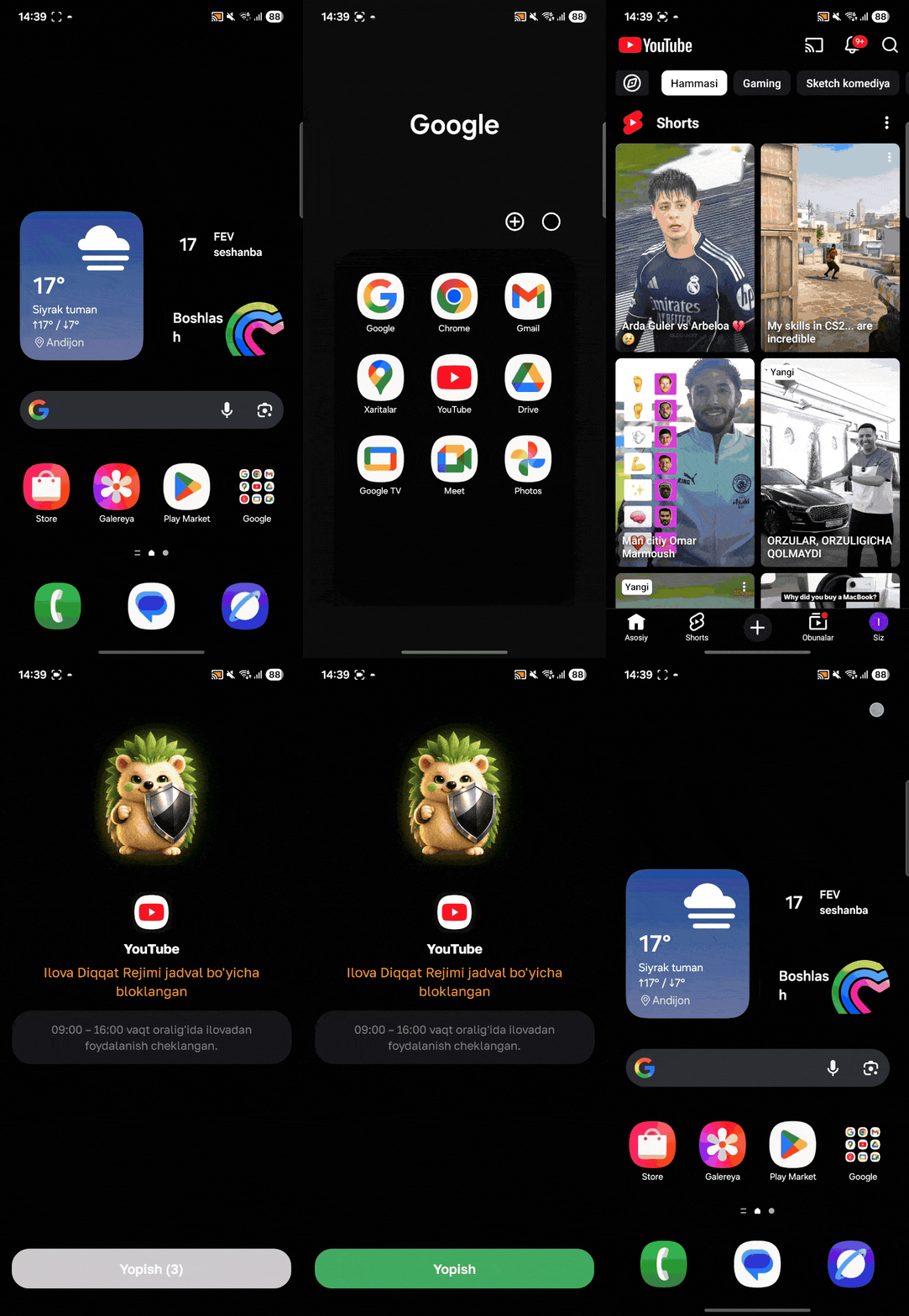
Turn on study mode: games and social media are paused while learning apps stay available.
RESULT
Better concentration and higher-quality learning.
PROBLEM
Parents worry about where their child is and whether they arrived safely.
TIKONCHA SOLUTION
Track your child on the map and get alerts when they enter or leave important places.
RESULT
More peace of mind and stronger day-to-day safety.
PROBLEM
Screen time can quickly become uncontrolled and disrupt routines.
TIKONCHA SOLUTION
Set daily limits and schedules per app. Access is restricted automatically when limits are reached.
RESULT
Children build healthier digital habits and balance.
PROBLEM
Without reports, it is hard to understand real phone usage patterns.
TIKONCHA SOLUTION
Get daily and weekly analytics by app, screen time, and activity trends.
RESULT
Parenting decisions are based on data, not assumptions.
PROBLEM
Children may encounter unsafe or age-inappropriate content online.
TIKONCHA SOLUTION
Filter risky websites and apps with automatic blocking for unwanted content.
RESULT
A safer and more controlled digital environment for children.


Start monitoring today.Tomorrow may be too late.
Every delayed day is one more day that can affect your child's emotional well-being.